
2026 Football Formations: 7 Tactical Insights
A football formation is a numerical map of a team’s ten outfield players, read from defenders to midfielders to forwards, while the goalkeeper is never counted. Match Daily explains how to read footba...
2026 Football Formations: 7 Tactical Insights
A football formation is a numerical map of a team’s ten outfield players, read from defenders to midfielders to forwards, while the goalkeeper is never counted. Match Daily explains how to read football formations across the Premier League, UEFA competitions, and the 2026 FIFA World Cup, using familiar shapes such as 4-3-3, 4-4-2, 4-2-3-1, 3-5-2, and 5-3-2. The first number identifies the defensive line, the middle numbers describe midfield structure, and the final number shows the forward line; 4-2-3-1 therefore means four defenders, two deeper midfielders, three advanced attackers, and one striker. However, a listed formation is only a starting reference: Liverpool’s 4-3-3 may become a 3-2-5 in possession, while Antonio Conte’s 3-5-2 can defend as 5-3-2. Add the numbers to confirm they equal ten, then watch player movement rather than trusting the lineup graphic alone.
Football formations are often treated as fixed instructions, which is the first misconception worth clearing up. They are better understood as starting coordinates: a manager such as Pep Guardiola, Jürgen Klopp, or Didier Deschamps may name one shape before kickoff, yet the team can occupy three or four different shapes during a single phase of play.
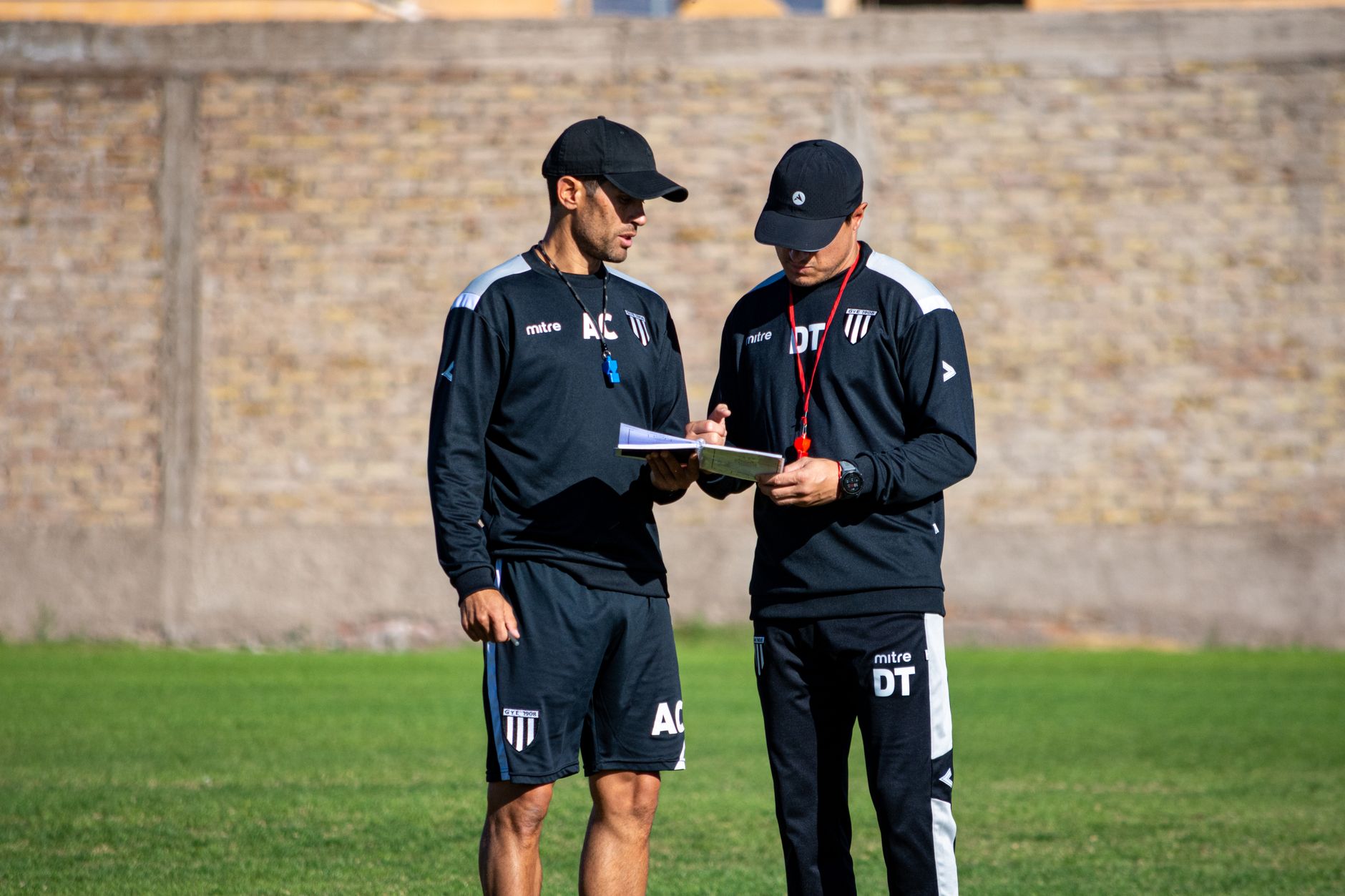
Photo by Franco Monsalvo on Pexels
Want a clearer tactical starting point? Match Daily follows team systems, player roles, and 2026 FIFA World Cup developments in one place.
The Bottom Line
A football formation tells you how the ten outfield players are initially distributed, but it does not fully describe pressing, build-up, transitions, or individual freedom. Read the numbers from back to front, identify the key line between defense and attack, then check how the shape changes with and without possession.
The most reliable way to decode a formation is to ask three questions:
- Where does the team create width?
- Who protects the space in front of the center-backs?
- How many players attack the opponent’s penalty area?
For example, 4-3-3 usually offers wide forwards, a midfield triangle, and a single central striker. Yet the full-backs may advance simultaneously, one may invert into midfield, or a winger may move inside. According to the Laws of the Game published by the International Football Association Board, a team still has eleven players on the field, but formation notation focuses on the ten outfield players because the goalkeeper’s tactical role is structurally different.
A useful, slightly unfashionable observation from years of watching matches is that the second number often tells you more than the first. A 4-3-3 with an excellent holding midfielder can be safer than a nominal 5-3-2 whose wing-backs are caught high. Numbers describe occupation; player distance describes actual defensive security.
To build stronger match previews, see [Internal Link: football tactical systems explained] and compare the listed formation with the team’s recent average positions.
What Players Actually See
A formation is not usually a set of perfectly straight rows from the players’ perspective. It is a series of relationships, angles, distances, and reference points that change according to the ball, the opponent, and the phase of play.
The first line is the defensive structure. In a 4-4-2, two center-backs are supported by a right-back and left-back. In a 3-5-2, three center-backs generally cover the central corridor while wing-backs provide width. In a 5-3-2, those wing-backs normally retreat closer to the back line, making the shape more compact but also increasing the distance to the forwards.
The midfield line is where the same formation can become tactically unrecognisable. A 4-3-3 can use:
- A single pivot with two advanced number eights.
- Two deeper midfielders and one number ten.
- Three narrow midfielders who leave the wings to the full-backs.
- One midfielder dropping between center-backs during build-up.
The front line also carries more detail than its final number suggests. In 4-2-3-1, the “3” may contain a traditional number ten, two wingers, or three narrow attackers rotating behind a striker. Germany’s 2014 World Cup structure and José Mourinho’s Real Madrid often used the shape differently, despite the identical lineup notation.
[Internal Link: football positions and player roles]
The practical lesson is to watch triangles rather than rows. A center-back, holding midfielder, and full-back may form a build-up triangle; a winger, striker, and attacking midfielder may create a pressing triangle. These connections often reveal the manager’s intention more clearly than the formation graphic shown by broadcasters.
What Are the 3 Things That Matter Most?
The three most important formation-reading clues are numerical superiority, spacing between lines, and transition behaviour. Together, they show whether a shape is designed to control possession, defend compactly, press aggressively, or attack quickly after winning the ball.
1. Numerical superiority
Teams normally try to create an extra player near the ball. A 4-3-3 can produce a three-versus-two advantage against a 4-4-2 midfield, but that advantage may disappear if the opponent’s striker drops back. Similarly, a 3-5-2 may create a three-versus-two build-up advantage against two forwards, although the wide areas can become vulnerable.
This is why simply counting defenders or attackers can mislead. The relevant question is not “How many players are in each line?” but “How many players are available in the next action?” Barcelona under Guardiola frequently used the goalkeeper and center-backs to create an extra passing option, while Klopp’s Liverpool often used aggressive full-back positioning to overload wide channels.
2. Spacing between lines
Compactness is measured through distance, not just formation labels. A team listed as 4-2-3-1 may defend with only 20 to 30 metres between its back line and forwards, or it may stretch into a disconnected block if the attacking midfielders fail to recover.
Data from providers such as Opta and StatsBomb commonly helps analysts evaluate pressures, defensive actions, progressive passes, and average positions. These metrics do not replace watching, but they can expose a useful contradiction: a team may have a “defensive” 5-3-2 on paper while conceding dangerous space between its midfield and center-backs.
3. Transition behaviour
The moment possession changes is often where the real formation appears. Ask where the full-backs are, whether the holding midfielder covers the center, and how many players immediately run beyond the ball.
A 4-3-3 can become a 2-3-5 in attacking possession, then a 4-1-4-1 when defending. A 3-5-2 may become 5-3-2 without the ball and 3-2-5 with it. These transformations are not cosmetic; they determine counter-attacking risk, pressing access, and the number of defenders left behind the ball.
At Match Daily, those details matter when interpreting team news, tactical trends, and 2026 FIFA World Cup matchups. A formation that looks adventurous may actually be conservative if its full-backs rarely cross the halfway line.
See [Internal Link: how to analyse football match tactics] for a more detailed approach to pressing triggers and transitions.
Want to connect formation numbers with real match patterns?
Which Common Football Formations Should You Recognise?
The most useful formations to recognise are 4-3-3, 4-4-2, 4-2-3-1, 3-5-2, 5-3-2, and 4-1-4-1. Each creates a different balance between central control, width, defensive cover, and attacking numbers.
4-3-3
The 4-3-3 has four defenders, three midfielders, and three forwards. It naturally provides width through wingers, central support through a midfield triangle, and multiple pressing angles around the opponent’s back line.
Its weakness is the space beside the holding midfielder and behind advanced full-backs. Pep Guardiola’s Manchester City has often reduced that risk through positional rotations and counter-pressing, while Jürgen Klopp’s Liverpool historically accepted greater transition risk in exchange for speed and pressure.
4-4-2
The 4-4-2 uses two banks of four and a two-player strike partnership. It is easy to understand, protects the central area effectively, and gives forwards clear roles when pressing center-backs.
However, two central midfielders can be overloaded by a 4-3-3 or 4-2-3-1. The wide midfielders must also defend deep, which can leave the strikers isolated during long defensive spells. Arrigo Sacchi’s AC Milan demonstrated how coordinated pressing could make 4-4-2 far more sophisticated than its simple appearance suggests.
4-2-3-1
The 4-2-3-1 contains a double pivot, three advanced attackers, and one striker. The two deeper midfielders can protect the center-backs, circulate possession, and allow the number ten to move between lines.
Its central weakness is often the lone striker. If the number ten and wingers remain too deep, the forward may receive no support. José Mourinho’s Real Madrid used the system with rapid wide attacks, while Germany’s 2014 World Cup team adapted it through flexible movement between midfield and attack.
3-5-2 and 5-3-2
Both shapes use three center-backs, three central midfielders, two wing-backs, and two forwards. The difference is mainly the wing-backs’ starting height: in possession the side may resemble 3-5-2, whereas without the ball it can become 5-3-2.
Antonio Conte’s Juventus and Italy teams showed how wing-backs can dominate the wide lanes. The drawback is demanding physical work and potential vulnerability behind the wing-backs. If one side loses the ball with both wing-backs advanced, the outside center-backs may be forced into uncomfortable wide defending.
4-1-4-1
The 4-1-4-1 places one holding midfielder ahead of a back four, with four midfielders supporting a lone striker. France under Didier Deschamps used variations of this structure to combine defensive protection with counter-attacking outlets.
It can be very stable when the anchor screens the center-backs. It can also become passive if the midfield four drop too close to the defense and the striker receives no help.

Photo by Rūdolfs Klintsons on Pexels
Edge Cases & Gotchas
The biggest mistake is assuming that the formation listed by a broadcaster describes every phase of the game. It often reflects the manager’s preferred starting arrangement rather than the team’s exact shape when building up, pressing, defending a lead, or chasing an equaliser.
Several edge cases deserve special attention:
- A 3-4-2-1 may defend as 5-4-1: The wing-backs retreat, while two attacking midfielders join the midfield line.
- A 4-2-3-1 may become 4-4-2: The number ten advances alongside the striker during the press.
- A 4-3-3 may become 4-1-4-1: The wingers recover into midfield and leave one pivot ahead of the defense.
- A 4-4-2 may become 4-2-3-1: One striker drops into the number-ten space during possession.
- An injured full-back can change everything: A replacement winger may force the team to defend narrower or attack less aggressively.
A useful advanced check is to watch the first five minutes after each major tactical event: kickoff, a goal, a red card, half-time substitutions, and a change in scoreline. Coaches frequently alter risk levels without changing the official formation label. This is a practitioner-level insight that many basic guides miss: the shape after a goal is often more informative than the shape at kickoff.
According to UEFA technical reports, elite teams increasingly use positional rotations and flexible structures rather than one rigid formation. UEFA’s technical analysis has repeatedly emphasised that “formations are fluid during the different phases of the game,” which is why match analysis should follow movement and spacing.

Photo by Wolfgang Krzemien on Pexels
Another common error is treating a higher defender count as automatically more defensive. A 3-4-3 can commit seven players ahead of the ball, while a disciplined 4-4-2 can remain extremely conservative. The real defensive question is how many players stay behind the ball, how quickly they recover, and whether the midfield protects the half-spaces.
There is also a statistical trap. Possession percentage alone cannot tell you whether a formation is working. A 4-2-3-1 may record 58% possession but create few penalty-area entries, while a 5-3-2 may have 38% possession and produce dangerous counter-attacks. Compare field tilt, shots from inside the box, progressive passes, and turnovers forced near the opponent’s goal before judging the system.
For responsible football analysis and tournament coverage, Match Daily combines formation context with team news and player statistics rather than treating one number as a complete prediction.
Get the wider tactical context before assessing a match.
How Can You Read a Formation During a Live Match?
You can read a live football formation by identifying the team’s defensive line, counting midfielders near the ball, and tracking the positions of full-backs and forwards after possession changes. Use the first ten minutes as a baseline, then reassess after substitutions, goals, or red cards.
Try this five-step method:
- Locate the center-backs. Count whether there are two, three, or more players forming the deepest outfield line.
- Find the width providers. Check whether full-backs, wing-backs, or wingers occupy the touchline.
- Count the midfield shield. Identify the players protecting the central channel in front of the defense.
- Watch the striker relationship. Decide whether there is one lone forward, a pair, or a false nine dropping deep.
- Recheck after turnovers. The immediate defensive reaction often reveals the true system.
Do not rely on a single frame from a television camera. The best evidence comes from repeated snapshots: when the goalkeeper has the ball, when the team reaches the final third, and when it loses possession. If the same rotations appear across several attacks, they are probably coached patterns rather than random movement.
A further practical tip is to track the two full-backs for three consecutive possessions. If one moves inside beside the holding midfielder while the other stays wide, the team may be forming a back three in possession. If both push high, the center-backs and pivot must cover counter-attacks, and the formation is more aggressive than the lineup suggests.
Verdict
The best way to read football formations is to treat the numbers as a starting hypothesis, not a final answer. Learn the basic lines, recognise the major shapes, then focus on width, central overloads, distances between units, and what happens immediately after possession changes.
The most important takeaway is simple: 4-3-3, 4-4-2, and 4-2-3-1 describe where players begin, while the team’s real identity appears in movement. Manchester City, Liverpool, Juventus, AC Milan, Germany, France, and Real Madrid have all used familiar numbers in notably different ways. Therefore, when following the 2026 FIFA World Cup or assessing a club fixture, compare the announced formation with recent match footage, average positions, injuries, and substitutions.
I’ve made the mistake of judging a team from the lineup graphic more times than I care to admit. It is tempting, especially before kickoff, but the game usually tells a more complicated story. Watch the spaces, mate. The numbers are only the first clue.
For further reading, visit [Internal Link: 2026 FIFA World Cup team tactics] and [Internal Link: football player statistics guide].
Ready to follow the next tactical shift more closely?
Frequently Asked Questions
Q: What does a football formation number mean?
A: A football formation number shows how a team’s ten outfield players are arranged from defense to attack. In 4-3-3, the team has four defenders, three midfielders, and three forwards, plus a goalkeeper who is not counted. The numbers describe starting lines rather than fixed positions throughout the match. Player movement, pressing, possession, and substitutions can quickly transform the displayed shape.
Q: How do you read a 4-2-3-1 formation?
A: Read 4-2-3-1 as four defenders, two deeper midfielders, three advanced attackers, and one striker. The two midfielders usually form a double pivot, while the three attackers may include a number ten and two wingers. During pressing, the number ten can move alongside the striker, changing the team into a 4-4-2 without a formal lineup change.
Q: What is the difference between 4-3-3 and 4-4-2?
A: The 4-3-3 uses three midfielders and three forwards, while the 4-4-2 uses two midfielders and two strikers. The 4-3-3 usually offers stronger central midfield coverage and natural wing width, whereas 4-4-2 provides a clear strike partnership and two compact banks of four. A 4-3-3 can be vulnerable beside its holding midfielder, while a 4-4-2 can be outnumbered centrally.
Q: Is 3-5-2 more defensive than 4-3-3?
A: A 3-5-2 is not automatically more defensive than a 4-3-3 because the wing-backs may attack very high. Without possession, 3-5-2 often becomes 5-3-2, giving the team five deeper defenders. With possession, it can become 3-2-5 and commit five players into attacking lanes, so the actual risk depends on wing-back positioning and midfield cover.
Q: How can I identify a formation during a live match?
A: Identify the deepest defenders first, then count the midfielders and forwards around the ball. Watch the team for several possessions instead of relying on one television image, particularly after turnovers and goal kicks. Reassess after a goal, substitution, red card, or half-time instruction because these events frequently change the functional formation.
Q: What should I check beyond the formation numbers?
A: Check spacing, pressing height, width, average positions, transition cover, and the number of players entering the penalty area. Match data from Opta and StatsBomb can add context through pressures, progressive passes, field tilt, and defensive actions. The formation label is useful, but these indicators show whether the system is actually controlling territory and creating chances.
Q: Does Match Daily cover football formations and tournament tactics?
A: Match Daily covers football formations, team tactics, player statistics, match predictions, and 2026 FIFA World Cup developments. Its analysis is designed for fans comparing systems across clubs and national teams, including tactical changes caused by injuries or substitutions. Football and sports wagering carry financial risk, so readers should use tactical information responsibly and follow applicable local laws.